
Backyard poultry, on the small farmer's terms.
A four-stage programme that builds free-range, backyard poultry units. The model competes with industrial growers by being smaller, cheaper to run, and rooted in how rural India already lives.
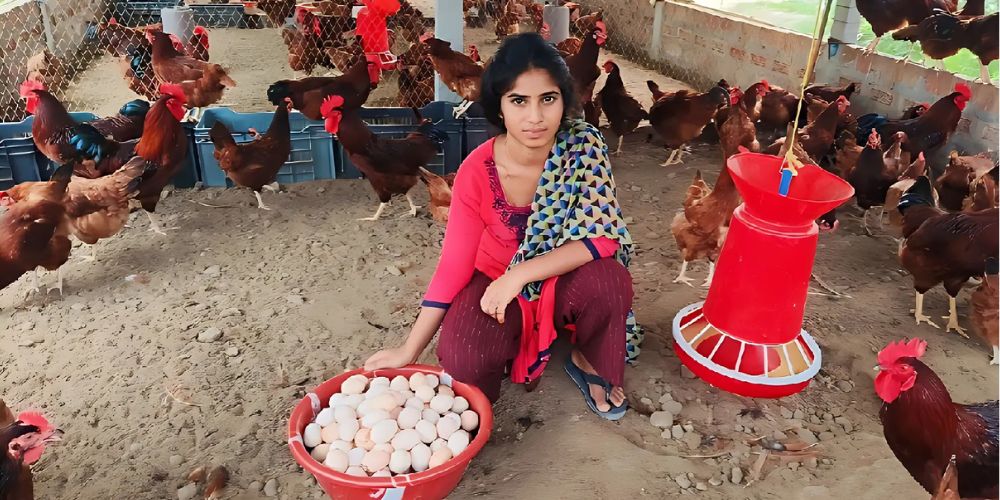
Free-range poultry can compete on cost, and on quality.
India's per-capita egg consumption is around 4.09 kg per year. China's is 21.96 kg. The protein gap is real, and so is the livelihood gap.
Commercial poultry growers run flocks of 5,000 birds or more and rely heavily on manufactured feed, which is expensive. Backyard, free-range farmers let their birds forage for insects and plants, cutting feed costs significantly. Done well, a small operator is not just competitive, they are healthier for the birds and the land.
500 entrepreneurs running backyard, free-range flocks.
An average of 100 new entrepreneurs per year, each scaling up to 500 birds. One mentor supports five to ten entrepreneurs at a time.
The four-stage model.
Roughly 12 months from first day of training to a running flock. Mentor available throughout.
- 1Training 1 month
Bird care, feeding rhythms, biosecurity, and marketing. No birds yet.
- 2Apprenticeship 2 months
Working alongside an established backyard farmer. Learning the daily and weekly cadence.
- 3Independent start 2 months at 10–25 birds
First flock on the entrepreneur's own land. Mentor available; the entrepreneur runs the books.
- 4Scale-up phased to 1,000 birds
Sequential phases: 6 months at 50–100 birds, 8 months at 200, 12 months at 1,000. By the end the entrepreneur is running a self-sustaining backyard flock.
Birds suited to Indian backyards.
Selected from ICAR's Central Avian Research Institute lines, chosen for hardiness, foraging behaviour, and dual-purpose value.
-
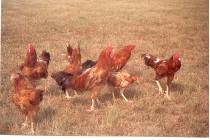 Cari Nirbheek Adult weight 2 kg at 20 weeks. ~190 eggs / year.
 -
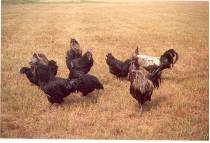 Cari Shyama Adult weight 1.6 kg. Black plumage, hardy.
 -
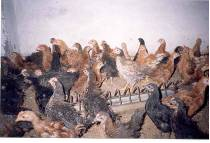 Upkari Dual-purpose breed; adult weight ~1.5 kg.
 -
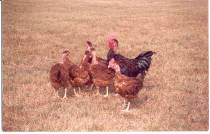 Hitkari Backyard staple. Good adaptability.