
Bringing the house sparrow back to Indian cities.
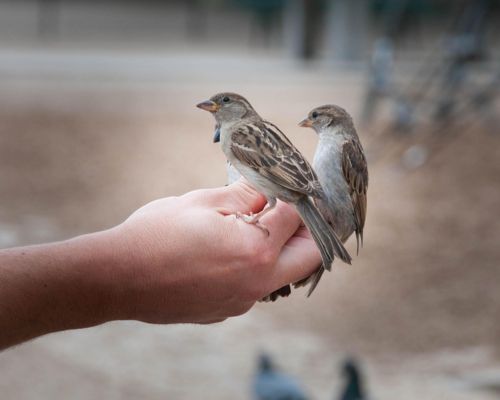
The house sparrow has lived alongside humans for ten thousand years. In the last fifty, it has largely disappeared from cities like Delhi, Mumbai, and Kolkata. We install nests in urban homes and schools so the species, and the sound, return.

A vanished neighbour, easy to invite back.
The house sparrow (Passer Domesticus) is named in the Yajurveda and in Buddhist and Jain literature. Most smriti texts prescribe expiation for killing one. It is the state bird of Delhi and Bihar.
Fifty years ago, the morning chorus of Indian cities was sparrows. Today, in major metros, you have to look hard to find them. The reasons are mundane: closed eaves on modern buildings, loss of low scrub, fewer edible scraps, more cats.
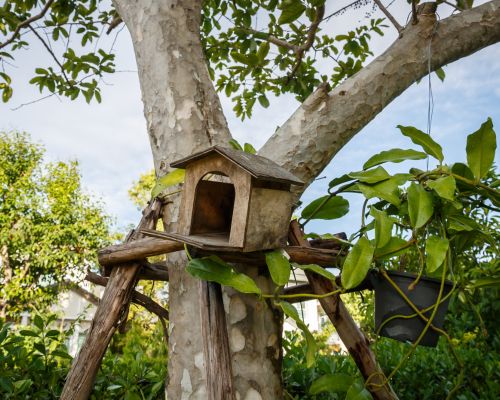
Restoring them is also mundane. A simple nest box, a regular supply of water and grain, and the species comes back. We supply both, and we use the act of installing the nest to teach children how to care for an animal that is not theirs.
1,000 sparrow nests in city homes.
An average of 200 nests installed each year in homes, schools, and community spaces in Indian cities. Each nest comes with the bird-feeder kit and an explanation of how to keep it stocked.
The house sparrow became associated with humans, and human habitation, around ten thousand years ago. Restoring it is one of the simplest gestures of reciprocity available to a city.
A small kit, installed where it matters.
Each nest is sized for the house sparrow specifically (entrance hole 32 mm — too small for larger urban birds that would compete for the cavity).
- 1 Site visit
We assess the home or school for shaded, predator-protected mounting points within reach for refilling.
- 2 Installation
The nest box is mounted, the feeder is fitted, and we leave a small starter supply of grain and a water dish.
- 3 Hand-off
We walk through the day-to-day care with at least one resident — usually a child — and check back in three months later.